Top 10 Great Pakistani Scientists Ever

This list of greatest Pakistani scientists prove that Pakistan is not far behind anyone in development of today and has a contribution in the modern world. Even though resources in the country are minimal, yet these brilliant minds were stronger enough to take over the circumstances.

(Following number-list is just for convenience, and it is not meant to rank them on certain positions.)

1) Dr. Naweed Syed

He is a Pakistani Canadian scientist. He is the first scientist who managed to 'connect brain cells to a silicon chip'. Dr. Naveed estimates science-fiction type 'Machine-Men' may be developed within 10 to 20 years, using his silicon chip. Currently he is a Professor and Head Department of Cell Biology & Anatomy at the University of Calgary, Canada. He was featured in Time Magazine (Canada) as well.


2) Naveed Zaidi

Organic Chemist and Polymer Scientist Naveed Zaidi developed world's first plastic magnet that functions at room temperature. Along with his colleagues Prof. Andy Monkman, Mr. Sean Giblin and Dr. Ian Terry from Department of Physics of Durham University, research took 4 years making him first scientist to develop world's first practical plastic magnet.


3) Amjad Farooq and Basit Farooq

They made world's first computer virus in 1986. It was made for MS-DOS operating systems. The virus used to infect the boot sector of storage media formatted with the DOS File Allocation Table (FAT) file system. This virus was suppose to stop and track illegal copies of their disk.


4) Abdus Salam

Abdus Salam was a  Pakistani theoretical physicist who won a Nobel Prize in Physics for his contribution to 'electroweak unification' in 1979. He is the first Pakistani to receive a Nobel Prize.


5) Sultan Bashiruddin Mahmood

Sultan Bashiruddin Mahmood is a Pakistani nuclear engineer. He has been an important part of Pakistan Atomic Energy Commission and regarded for development of the SMB probe to detect heavy water leaks in nuclear power plants. You can know more about him by watching his interview given to a local Pakistani TV Channel.


6) Ayub Khan Ommaya

Dr. Ommaya published over 150 articles, chapters, and books. His research focused on cancer treatment, traumatic brain injury, a CSF artificial organ, and philosophy of mind. He developed Ommaya reservoir in 1963. The reservoir was the first medical port to use silicone which is biologically inert and self-sealing.


7) Sayed Amjad Hussain

Sayed Amjad Hussain is another Pakistani inventor who invented two surgical devices – the pleuroperitoneal shunt and a special endotracheal tube. Dr. Hussain is a member of 17 professional organizations, 10 administrative positions, is a visiting professor to 12 universities throughout the world and is a member of the editorial board of 6 medical journals.


8) Sohail Khan

Professor Sohail Khan, a Pakistani researcher at Loughborough University designed a clever lavatory that transforms human waste into biological charcoal and minerals. These can then be used as fuel or a form of conditioner for soil. It also produces clean water. His invention was appreciated by Bill Gates.


9) Mahbub ul Haq

Pakistani economist Mahbub ul Haq introduced the concept of 'The Human Development Index' in 1990. Since then, this concept is used to  rank countries by level of human development.


10) Abdul Qadeer Khan

A.Q. Khan is nuclear physicist and a metallurgical engineer. Apart from participating in Pakistan's atomic bomb project, he made major contributions in molecular morphology, physical martensite, and its integrated applications in condensed and material physics.

Top 10 Online Shopping Websites in Pakistan

Online Shopping Websites

The process of purchasing products or services over the Internet on electronic commerce is known as online sometimes known as e-tail from “electronic retail” or e-shopping. Online shopping is done through E-commerce which facilitates the customer to directly buy goods or services from a seller over the Internet using a web browser. Online shopping allows the consumer to search and select the thing easy which they want by visiting the website of the retailer directly or by searching among alternative vendors using a shopping search engine.
Online shopping is time saving. It helps the consumers to buy products from safest place in short time. Everyone wants the thing quickly and easy on his doorstep. In Pakistan, technology is gradually being improved. Many websites for online shopping is being developed. The trend of online shopping is getting popular day by day in Pakistan. Many people of Pakistan are shopping through e-commerce. People usually buy electronic items such as cell phones, computers, tablet PC’s and computer accessories, laptops from online stores, cloth, cosmetic products and a lot of other products. This trend of online shopping can enhance the business e-commerce and online marketing which can improve the economy of Pakistan.
For the people who are fond of online shopping, a list of top 10 Online Shopping Sites in Pakistan is given below. This list will help users for choosing the best site for online shopping.
  1. Homeshopping.pk
Homeshopping.pk is the safest, secure and trustworthy online shopping website. It is a user-friendly website. You can easily search and order the products. It allows the user to directly place the order from their smartphone, Android and iOS application from all over the Pakistan. The best feature of this website is the quick and friendly response and standard delivery time to each and every visitor. The company has its own courier and TCS service to speed up the delivery time of the products.
  1. Shophive.com
This site is running from 2005. it is a best online shopping platform for buying products because this website is providing a verity of products including  smartphones, apple, computer & laptops, TV & projectors, electronics, cameras & video games, office products, health & fitness, home appliances, etc. The best thing of this website is its free delivery system of the products which almost free in all over the Pakistan.
  1. Symbios.pk
This is a fastest running online shopping website nowadays. This website is running from last five year due to the best feedback of the consumers. Most of the people prefer this an online retailer because this website providing daily discount deals with the name of “JADOO OFFER”. Almost all kind of products across Pakistan are being offered. The major quality products which are provided on the doorstep are electronic, beauty and fashion items like laptops, smartphones, computers, office products, watches etc.
  1. Ishopping.pk
Ishopping.pk website is basically for online shopping of electronic products from the world’s leading brand. This website was developed in 2011. The best feature of this website is quality and reasonable price of the products
All the unique and awesome gadgets are available on this website at the reasonable price. The variety of products includes  game consoles, smartphones Apple, I phone’s, Sony, Movado, Sony PlayStation 3, Samsung, Sennheiser, Logitech, tablet PC, home theaters, wearable gadgets, media players and much more products.

  1. Daraz.pk
It is one of the best online shopping platforms in Pakistan that is offering a variety of goods and products including electronics, electrical, mobile & computing, books to beauty & fashion accessories, clothing, home appliances, kids’ products, apparel, jewelry and much more. The delivery, payment and warranty system of Daraz.pk are also very simple. The best feature of this website is that consumer pays cash on delivery and 7-day return policy in case of any defect in the products.
  1. kaymu.pk
It is the best trading site. It is being used both for online selling and buying of a variety of product. On this website, seller and buyer can trade directly to each other. This website is offering a variety of goods like footwear, fashion accessories, electronics, watches, mobile & computers, home appliances, health & beauty, sports & outdoors, kitchen & garden products, clothing, jewelry, toys and much more.
  1. Vmart
Vmart is the top online shopping website in Pakistan since 2007. This online store was developed specifically for electronic products. A variety of quality base branded electronic products are available on this store. This electronic stock includes Apple, audio & video products, TV & mobile accessories, tablets PC, cameras, office products, memory storage devices, printers & scanners, wireless networking system, lighting products, toners & ink cartridges, wearable gadgets, and much products.
  1. Yayvo.com(Tcsconnect.com)
Yayvo.com is an old online shopping store. First its name was TCS Connect. But,  in this time, it is being used as Yayvo. Yayvo.com is providing a lot of variety amazing of items and product at your doorstep. The featured products include electronic products, TV and multimedia items, sweets/fruits, books & stationery, health & beauty, etc.
  1. BNBaccessories.com
It is an online shopping store for buying fashion products and accessories. All the branded fashionable products are available on this store including clothes, shoes, jewelry, beauty, bags & accessories, wallets and much more. The best thing of BNBaccessories.com is its delivery and payment system. It also offers the cash-on-delivery system in all over the Pakistan

  1. Shopdaily.pk
Shopdaily.pk is an online shopping store for buying fashion and clothing products. Shopdaily.pk provides a variety of products including beauty, wearing, and fashionable accessories for men, women and kids.

Top 10 Pakistani Singers

Pakistan is the home to some of the greatest musicians of all times. Such is the talent and voice of these singers that Bollywood, today, is filled with such great talents as Atif Aslam, Adnan Sami and Ali Zafar, to name just a few. There are also some excellent bands like Strings, Fuzön and Jal, which are doing excellently well in India, and have fans from both sides of the border. While these contemporary artistes have been able to unite the countries with modern popular music, there are some traditional Pakistani singers who have held on to the essence true to the music and culture of the two countries. Let’s remember some of the legendary Pakistani singers (male) famous in India for holding onto or reviving the originality of the two brother-countries.
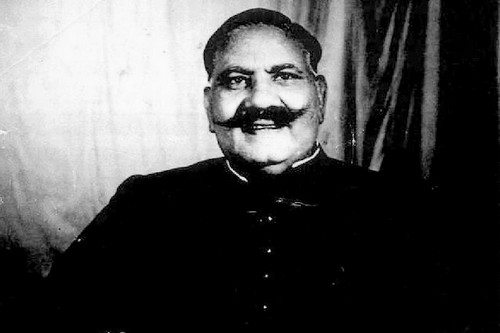
1. Bade Ghulam Ali Khan (2 April, 1902 – 25 April, 1928)
Legendary Pakistani Singers
Ustad Bade Ghulam Ali is probably the most prominent of classical singers. Born in the then Punjab province of British India named Kasur that became a part of Pakistan after Partition, he was well-versed in Sarangi, and received vocal training from a very early age, which eventually led him to become one of the most accomplished artistes in the Pakistan and India. He was the true representative of the commonness between Pakistan and India: he did not believe in the Partition, and thought that if one child trained in Hindustani classical music in each household could prevent the Partition. He lived and performed in Lahore, Bombay, Calcutta and Hyderabad. Yaad Piya Ki Aaye, Ka Karu Sajni, etc. are songs sung innumerable time and turned into different renditions in India. It is not right to give him a nationality because his home was the world of music.
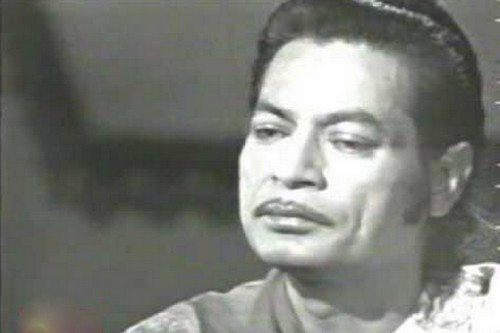
2. Amanat Ali Khan (1922 – 1974)
Ustad Amanat Ali Khan Legendary Pakistani Singers
Ustad Amanat Ali Khan was a Pakistani classical singer born to a musical family in Hoshiarpur of Punjab. He was the grandson of Ali Baksh Jarnail, the founder of the Patiala Gharana. His strength in Hindustani classical music was, naturally, unparalleled, and he became famous at an early age with his Mehfil performances. After the Partition, he continued his singing career in Pakistan and became famous throughout South Asia as a representative of the Patiala Gharana. He has gifted the world with songs like Yeh Na Thi Hamari Qismat, Yaar Ko Maine and many more, written by the best poets of the time, such as Mirza Ghalib and the like.
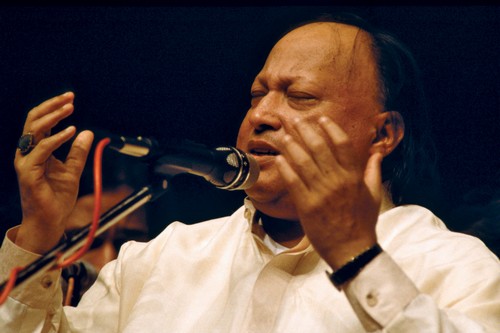
3. Nusrat Fateh Ali Khan (13 October, 1948 – 16 August, 1997)
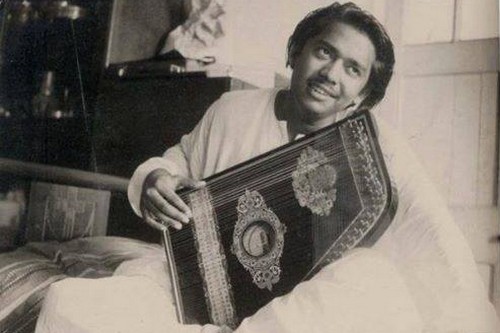
Legendary Pakistani Singers Nusrat Fateh Ali Khan
Shahenshah-e-Qawwali, Nusrat Fateh Ali Khan, was known for his eminence in the Sufi genre of music, as well as Qawwali. He also won hearts with his renditions of traditional folk music. Born in Faisalabad, his father wanted him to become a doctor, since he was of the idea that Qawwali singers had a low social status, But, Khan’s talent completed his father to relent, finally. He has left behind a plethora of the masterpieces in Urdu, Punjabi, Persian, Braj Bhasha and Hindi. Kinna Sohna, Kacche Dhaage, Piya Re, Dulhe Ka Sehra, and many more of his songs have been used in Bollywood films, the western fusions of the traditional songs have also won over hearts.
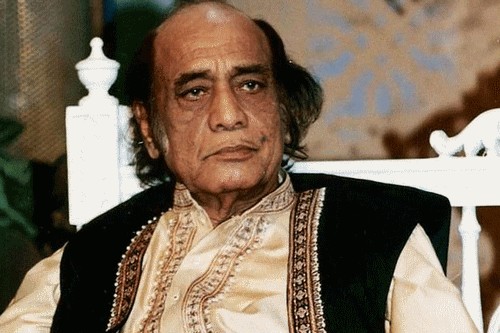
4. Mehdi Hassan Khan (18 July, 1927 – 13 June, 2012)
Legendary Pakistani Singers Mehdi Hassan Khan
Born in Rajasthan to a family with a long tradition of music, Khan Saab received his training from his father and his uncle. As he grew up, he had to face financial hardships that led him to become a mechanic. But, his love for music never died, and he kept practising with diligence. As luck would have it, he eventually became a noted playback singer. His calibre as a singer of Thumri, Dhrupad, Kheyal, etc. have been proven. But, he is most renowned as King of Ghazals. Even Lata Mangeshkar, with whom he had the duet, Tera Milna, was full of praise for him. Perhaps, the most soulful song which he is associated with is Ranjish Hi Sahi. His husky voice reverberates in the mind of every Ghazal patron.
5. Salamat Ali Khan (1934 – 11 July, 2001)
Legendary Pakistani Singers Salamat Ali Khan
Ustad Salamat Ali Khan is a member of a musical dynasty of Pakistan. He has a glorious career with his brother, Nazakat Ali, as they together gave some of the most stirring performances in Indian music. He was an exponent of the Chamchaurasi Gharana that specialized in Jugalbandis in Dhrupad style. After the death of Nazakat Ali, Salamat Ali Saab continued to record solo as he believed that as a part of such a musical family as his, it is his responsibility to sin, irrespective of professionalism or emotions. He is considered one of the greatest vocalists of the 20th century, for his Khayal singing.

Top Pakistani Foods | Best as ever

Best Pakistani Food 
People's Recommendation...

I believe the variety of food available in Pakistan is enormous. Every city would come up with its own kind of food. The taste would differ as you travel. Furthermore, Pakistan being a diverse country gives us another reason to believe that we can enjoy more dishes. It is not only about curry, in fact the types of rice served then the sweet dishes and the salty ones, tremendously huge amount of dishes.M+2
Pakistani food is so delicious, tasty. it should be in top 3 people in UK, Canada, USA and other countries are actually eat Pakistani food because Pakistani food has chicken and meat. where as Indian food is basically vegetarian. Pakistani food includes meat, pulses, vegetables, beans, seafood and sweets. it is so rich and has variety and diversityM+1
Well Pakistani food has ALL SORTS OF FLAVORS and I mean ALL. You don't find spice or juiciness in Arabian food or meat in India (yes Hindus can't eat meat. Its holy for them O. O) so you can find any flavor, spice or colour in our foodM+3
I once went to Pakistan and I thought thei I think Pakistan food is the best it has the best taste it is even better than Mexico so it deserves to be number 1M+5
Pakistani food is an amazing combination of Indian and Arabian cuisine. It has the best balance of spices, not to forget the multi cultural affect. The best food ever!M+4
As usual, please stop complaining against India in food section too. Stop this enmity against India in everywhere. Pakistan separated from India. All the dishes that Pakistan has now all belongs to India because Pakistan was part of India earlier.M-1
The best, period! Eat it yourself and then make up your mind for yourself. I guarantee you'll fall in love!M+5
They have more food dishes than India with more variety of vegetarian and non vegetarian dishes so I thing it should be at the top because Pakistan and India share most of the dishes and traditionsM+1
Pakistani food is THE BEST! Now, most people would think that Indian and Pakistani food are basically the same thing but that is definitely not true. Try both someday and you'll see the difference.M+1
It's the best, it's that people don't know it. As an English (White) person I had to go to Pakistan for a business trip. I never look forward To it but when I had a bite of a food. It was scrumptious, absolutely amazing. Pakistan just don't have curries lets there many burger stands and also fantastic Chinese, and other food genre, come here you won't be attacked by a terrorist I gurantee it go to Lahore, and there's great places like Yum Yum and the best is I think it's called ZoccoM+1
The food is spicy, in lots of more variety and tasty flavors. India and Pakistan have the same food so Pakistan should be higher on the list.M+1
This is madness! They don't even know who invented the biryani, palaow, and lots of food.. INDIA is 100% COPY COUNTRY they copy hollywood, and also PAKISTAN! In food, singers ETCM+4
Pakistan food is the best if you don't believe me try it your self and then say it in1 rankM+1
Pakistani food... Just love it... Its Number 1 in this list... You cannot deny it... Viv La Pakistan -richpM+1
Pakistani food are best in the worldM+3
Why is Pakistani cuisine so down on list... It is really tasty and its almost same as north Indian cuisine - zuni
Best meat dishes in world and best street foodsM+2
Pakistan foods are delicious and street foods are also awesomeM+1
We have the best food. And we also have the best fruits in the. WorldM+1
Pakistan food is best in the world especially chicken biryaniM+1
If people don't visit Pakistan they should try it!
because people mostly visit India they think its nice and Indians have copied our foods!M+4
Pakistani food is amazing. Have you ever tried the sweets? They are really really good
Pakistan is no1 in the world your rank is truly falseM+1
Great food. Should be much higher on the list!M+1
I swear it's the same as Indian sometimes better
Its just awesome should be higher on the list
Pakistani food is really the best. Indians basically copy the best of Pakistani dishes and present it as their own. Well who likes Idli? I don't how did the Indian food reached in the top 10. The only good thing they make is Dossa, and that also chicken based. Ever ask an Indian to cook anything else other than vegetables, and you'll see the result!
Pakistan should be much higher on the list
Pakistani food are delicious and rich I think 1st should be Pakistan
Pakistani tradition and culture are the best
StarM+3
Pakistan best its fruits are very good
Better than Indians :P laugh out loud
Pakistani food is as good as Indian as long as they are authentic. Pakistanis prepare meat better and rice and India is great with veg. They are cut from the same cloth and I love both.
It has the best food in the world
Pakistani food is the best food in the world, so many varities spicy, non spicy, rice variety everything available in Pakistan for ever country.
Why the hell is this 800!? It should be in the top 5! PEOPLE VOTE FOR Pakistan IT HAS ONE OF THE BEST FOODS IN THE WORLD! -venomouskillingmachine
Unfortunately the only naplese cuisine I have tasted is momo... Plenty in delhi - zuni
What Pakistan made the best desis Bangladesh and India has this is bullcrap
Lamb Pilau a rice and lamb dish it's so lovely when cooked right. All the meat and chicken dishes and the nice big tasty chapatis (rotis). I think there is a big overlap in Pakistani and Indian cooking.

I pretty much love and can appreciate all good food. I love good Italian food. I really wanr to visut Italy and enjoy fresh Italian food I would learn so much! Of course I love Chinese food. And I'm sure if I have ghe chance to try dishes from other countries I will love them too. XM+2
My favourite in the world.
Pakistani food is quite original.
And unique.
Lets eat pakistani foods, there is no comparission of food of Pakistan,M-1
Pakistani Food is Delicious and outclass Quality of every dishes and many Indian foods are copying of Pakistani food they have Chicken Karahi and many more
I love Pakistani Tasty food
Pakistani food= Indian food though Pakistanis invented themM-1
Let me tell you something that all food in India was brought by Mughals(Muslims) and before Mughals they only ate vegetables my point is that Pakistna brought that food and Pakistan should be in front of IndiaM+8
Pakistani foods are thae best foodsfoods ever. It is mostly liked food world wide.Thumbs up for Pakistan.
Pakistani food is delicious. Pulao biryani reshmi kabab are so tasty that you can't even imagine
Guys Paki and Indi foods are typically the same thing. Pakistan Rules!M-1
Pakistani food has large variety and taste, from sour to sweet every dish has its own uniqueness. Most of foods are made from beef, mutton, chicken and vegetables and include variety of spices, karachi biryani (spicy rice), chapli kabab, dampukht and lahorians are famous for food in the world, so I love pakistani food more than anything
If you really love eating meat and chicken, Pakistan is the best place ever! You simply cannot beat its dishes starting from Chicken biryani, Nahari, Paye, Kebabs, Koftay, and lots more. The extra spice in it adds to its taste, and when one starts eating it there is no stopping. I simply love Pakistani food and hope many people love it too! - Abdussami
If you really love eating meat and chicken, Pakistan is the best place ever! You simply cannot beat its dishes starting from Chicken biryani, Nahari, Paye, Kebabs, Koftay, and lots more. The extra spice in it adds to its taste, and when one starts eating it there is no stoping. I simply love Pakistani food and hope many people love it! - Abdussami
Yum bhiryani, chicken, thikas, samosas,chat with extra spices and somuch more how could no one like it. They are so DELICIOUS.
I love Pakistani chapata foods... The taste of Pakistani food is awesome... Tourists come from the hole world to taste their food I love PakistanI FOODS and every sunday I go to Pakistani hotals... I am eating karahi at this time... It is yumy
... YuummM+4
Pakistani meat dishes are the best such as Chicken Mutton and beef Biryani, Nihari, Paye, Chicken and Mutton Kharhai, Bar B Q (Chicken, Beef, sea food) and so on-----

History Of Education In Pakistan

Education In Pakistan


There are two systems of education in Pakistan: traditional and modern. The traditional system, which focuses on Islam, has experienced an exponential growth since the 1970s, influenced by the wave of Islamic fundamentalism from Iran. In the late 1990s, the traditional Islamic schools, called madrassahs, came increasingly under the influence of the anti-West Taliban movement in Afghanistan. The traditional schools have multiplied tenfold, for the large part training mujahideens whom the government of General Parvez Musharraf, who assumed authority in October, 1999, has lauded as freedom fighters, ready to wage a jihad (religious war) through terrorist activities against nonbelievers. While only 4,350 madrassahs are registered with the government, the actual number has been estimated at between 40,000 to 50,000. A revealing article by U.S. anti-terrorist expert Jessica Stern in Foreign Affairs (November-December 2000) has warned the world about the kind of "education" imparted by these "Schools of Hate" and their role in creating a "mindset" for jihad.
A critical examination of the modern formal education system extending from primary to the university levels by experts ranging from the World Bank to those in research institutes in Pakistan has found the colleges in the country "sub-standard, bureaucratic, government-controlled, poor and inefficient," to quote Tariq Rahman of the National Institute of Pakistan Studies of the Quaid-I-Azam University. Such criticism fails to explain how the several hundred thousand Pakistani graduates who have migrated to the West, notably to Great Britain, the United States, and Canada, mostly as professionals—whether as doctors, engineers, pharmacists or educators—have with only marginal additional training been able to compete with the very best in those advanced countries.
Pakistan came into being when colonial British rule on the Indian subcontinent ended in August 1947 and the two sovereign states of India and Pakistan were created. Of these, Pakistan constituted two wings—West and East—separated by more than one thousand miles of Indian territory. The new state was the result of a demand for a separate homeland for India's Muslims as articulated by the Muslim League political party and its sole spokesman, Mohammed Ali Jinnah (1876-1948). The Lahore Resolution, adopted by the Muslim League in 1940, however, had called for independent states in the northeast and northwest. That was changed by Muslim League legislators in 1946, who called for a single Muslim state, Pakistan. The new state's capital was Karachi. Partition still left one-third of the subcontinent's Muslims in India; after the separation of East Pakistan and the birth of Bangladesh in 1971, Pakistan was left with 45 percent of its original population, the number of its Muslim citizens being less than those in India.
For the first 24 years of its history, Pakistan had two constituent parts: West Pakistan, comprising the four provinces of the Punjab (western half of the old Punjab), Sind, the North-West Frontier Province (NWFP), and Baluchistan; and East Pakistan, comprising East Bengal, which seceded after a bitter political struggle and military conflict from Pakistan in December 1971 to become the new state of Bangladesh with 55 percent of the population. Pakistan is bounded to the west by Iran, by India to the east, China to the northeast and Afghanistan in the north. There are federally ruled territories, including the capital of Islamabad, and the country controls a part of the former princely state of Jammu and Kashmir.
Pakistan traces its history of education to the advent of Islam and Islamic/Arabic culture to the Indian subcontinent with the invasion of Muhammad bin Qasim in Sind in 712 A.D.. By that time, the Arabs had already distinguished themselves not only as conquerors and administrators over vast territories in the Middle East and North Africa but even more significantly as creators of a culture replete with literature, art, architecture, and religious studies. With the establishment of Muslim rule at Delhi in 1208 A.D., the Islamic culture made extensive inroads on the subcontinent, converting a quarter of its population to Islam over the next five centuries.
The traditional school system had been the mainstay of education among Muslims of the subcontinent from the thirteenth to the eighteenth centuries until the rise of the British power beginning in 1757. Increasingly, some leaders of the Muslim community, notably Sir Sayyid Ahmad Khan (1817-1898), urged the Muslim youth to join the modern educational system initiated by the British. With the adoption of English as a medium of instruction after Thomas Babington Macaulay's infamous minute in 1835, and the rapid increase in the number of educational institutions following Sir Charles Wood's Education Despatch of July 1854, learning in Sanskrit, Arabic, and Persian receded, making way for English and for the adoption of Western education. In 1857 three universities were established in the "presidency" cities of Calcutta, Bombay, and Madras, producing not only the subordinate bureaucrats as intended but also hundreds of university graduates wanting to take up higher education in the social sciences, humanities, and natural sciences.
Hindus took more readily to the new education than did the Muslims. Muslim leaders such as Sir Sayyid saw the danger that their co-religionists would fall behind the Hindus and be kept out of the bureaucracy if they did not prefer the modern educational system over the traditional. Under Sir Sayyid's leadership, the Anglo-Oriental College (later upgraded to Aligarh Muslim University) was founded in 1875. It did not eliminate the traditional system of education, but there is no doubt that it seriously undermined its standing and standards. The Anglo-Oriental College provided higher education on the British pattern (more particularly that of Cambridge University) and produced a remarkable leadership for the Muslims of the subcontinent, particularly in present-day Uttar Pradesh, for educational, social, and legal reform and promoted the Muslim nationalist movement, which eventually led to the partition of the subcontinent and the birth of Pakistan. It also produced brilliant graduates, who went to England for higher education, some of them serving in the Indian Civil Service, which prided itself in being the iron framework of the British imperial edifice in India.
Roughly 67 percent or two-thirds of Pakistan's population of 129,871,000 (1995 estimate) lives in rural areas, leaving about 43 million in urban areas. Nationwide, children between ages 5 and 9, the primary school age, numbered about 16.8 million, while those between 10 and 17, at which point they would reach the 12th grade, numbered about 21.7 million. In general, the population is young, with persons below 30 numbering about 65 million, accounting for 50 percent of the total.
The population comprises five ethnic groups: the Punjabis, constituting the majority at 63 percent of the total; the Sindhis, at 12 percent; the Pathans, at 16 percent; Baluchis, at 5 percent; and mohajirs (literally, immigrants), who were primarily the result of a massive migration in 1947 mainly from India's state of Bihar. Corresponding to these categories are the linguistic groups, though they do not necessarily match the administrative boundaries. The languages claimed by the people in the census as mother tongue include: Punjabi, Sindhi, Pashto, Baluchi and Brahui, the last two being used in Baluchistan.
Although Urdu is claimed by a small percentage (eight percent) as their mother tongue, it enjoys the status of the national language largely because of its historical importance during the movement for the Muslim homeland. Urdu, the language of the educated Muslim elite from Northern India who provided critical leadership to the nationalist movement for the creation of Pakistan, draws substantially on Persian and Arabic for its vocabulary and uses a modified version of the Persian script, which is written from right to left. Since the birth of Pakistan, Urdu is taught in all schools; in Punjab, it is taught as first language and its script is used by those writing in Punjabi.
English was used from the beginning as a national language for official purposes. And though the 1956 constitution limited its use for 20 years, the 1973 constitution stipulated a 15-year period during which Urdu would completely replace English for official purposes. This has not happened.
Almost all the people—97 percent—are Muslims, two-thirds of whom are Sunnis professing the orthodox Hanafi school of jurisprudence. Nearly one-third are Shi'ites, who are subdivided into Ismailis (followers of the Agha Khan), the Twelvers (Ithna Asharis), and Bohras. Besides these, there is a very small though influential sect of the Ahmadiyahs, or Qadianis, who do not accept Muhammad as the final prophet, which constitutes the first of the five basic tenets of Islam. In 1974, a constitutional amendment categorized the Ahmadiyahs as non-Muslims; they were grossly persecuted during the decade-long Zia regime (1977-88). Hindus and Christians account for 1.5 percent each, and there are small numbers of Parsis or Zoroastrians, with a very high percentage of graduates and professionals.
At the time of the country's birth in 1947, large-scale human migrations took place: an estimated 4.7 million left Pakistan for India while 6.5 million came to Pakistan with a net gain in population of 1.8 million. The largest demographic changes occurred in the Punjab, which gained 5.2 million and lost 3.6 million. The second largest to suffer demographic changes was Sind, which lost most of its Hindu population, which had controlled more than 90 percent of its economy and held important positions in bureaucracy, education, and the professions. Most immigrants flocked to the cities; in 1951, nearly one-half of the population in the major cities were immigrants, including a very large group from India's Bihar state. The Biharis and their descendants are pejoratively called mohajirs (immigrants), a term that should have applied to everybody who came from outside and should, in all fairness, have a terminal date, after which time they should be considered regular inhabitants of the land. The Biharis, who concentrated in Karachi, remain unintegrated into the Pakistani society even a half-century after their initial migration. During the very unsettling conditions in Afghanistan in the late 1970s and early 1980s, an estimated 3.7 million refugees moved into Northwest Pakistan, placing an economic burden on all the facilities, including the educational system.