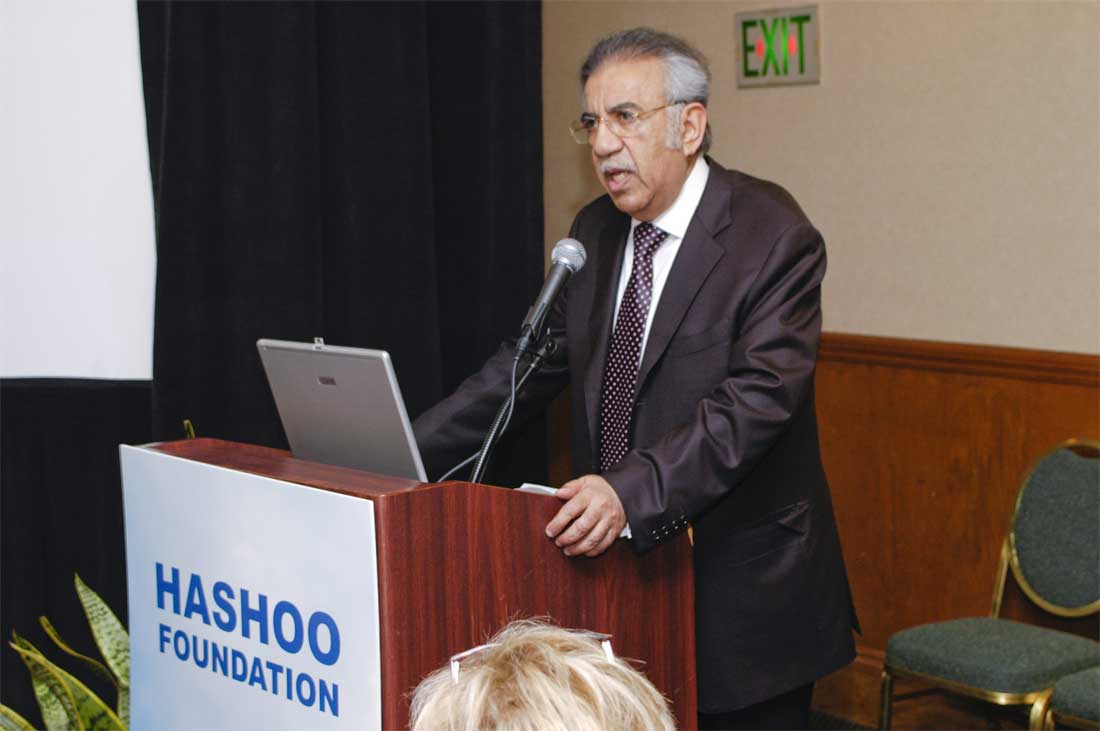
Top 10 Richest People in Pakistan

Pakistani Billionaire

Ranking: 1, Worth: £1.25b ($2.5billion), Industry: Businessman
Mian Muhammad Mansha is the richest person of Pakistan. He is the owner of Muslim Commercial Bank.
2. Asif Ali Zardari
Zardari
Ranking: 2, Worth: £900m ($1.8billion), Industry: Politics
Mr. Asif Ali Zardari is the 2nd richest person in Pakistan. Mr. Zardari is the current president of Pakistan. His assets hold hundred of million dollars, he has 8 prime properties in UK, he also has multi-million dollars mansion in USA, huge stakes in sugar mills all over the Pakistan.
3. Anwar Pervaiz
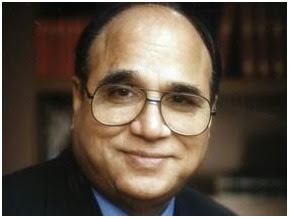
 Anwar Pervaiz
Ranking: 3, Worth: £750m ($1.5billion), Industry: Businessman
Anwar Pervaiz is the third richest person in Pakistan. He is the Chairman of Bestway Group and they own 50 cash and carry’s. He is also shareholder of UBL.
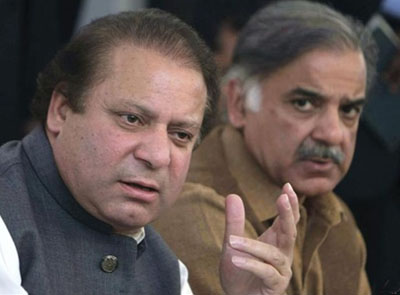
4. Nawaz Sharif & Shahbaz Sharif family
Nawaz Sharif & Shahbaz Sharif family
Ranking: 4, Worth: £700m ($1.4billion), Industry: Politics/Businessman
The Sharif brothers are on number 4 position among the richest people of Pakistan. These two are famous politicians. They are mainly Politicians as well as Businessmen. Before becoming PM, Nawaz Sharif was a major share holder along with his brother and cousins of Ittefaq Group.


5.  Saddaruddin Hashwani

Ranking: 5, Worth: £550m ($1.1billion), Industry: Businessman
Saddaruddin Hashwani is 5th in the list of top 10 richest people of Pakistan. He is the tycoon of Hospitality Industry in Pakistan. He is the chairman of Hashoo Group of Companies. He is the owner of Pearl Continental and Marriott.
6.  Nasir Schon & family
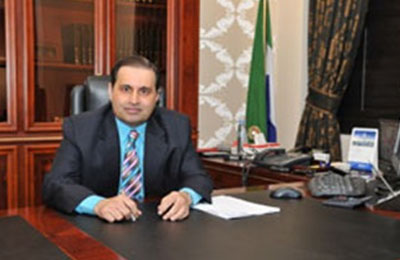
Nasir Schon & family
Ranking: 6, (tied at 6) Worth: £500m ($1billion), Industry: Businessman
Nasir Schon is Pakistan’s 6th richest man. He is Head of Schon Group. He is also the owner of Dubai Lagoon, UAE. Nasir Schon is also known to be one of the first people to have a Rolls-Royce in Pakistan.
7.  Abdul Razzaq Yakoub & family
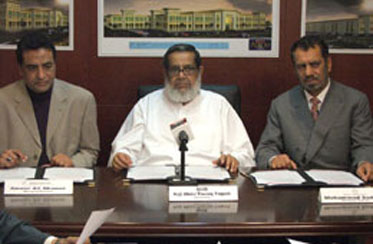
Abdul Razzaq Yakoub & family
Ranking: 7 (tied at 6), Worth: £500m ($1billion), Industry: Businessman
Abdul Razzaq Yakoub is the 7th richest man of Pakistan. He is the president of ARY group and World Memon Organization (WMO). He is controlling around 7 channels. Mr. Abdul Razzaq has also got 20 Gold outlets in Asia.
8.  Rafiq Habib & Rasheed Habib
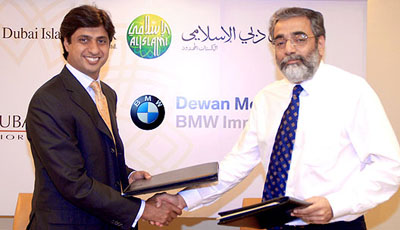
Rafiq Habib & Rasheed Habib
Ranking: 8, Worth: £450m ($900), Industry: Businessman
Rafiq Habib and Rasheed Habib are at the 8th position. They have always played a good role in helping out Pakistan’s economy. They are the owners of Bank Al-Habib, Habib Bank A.G Zurich, Indus Motors assembling Corolla cars etc.
9.  Tariq Saigol & Nasim Saigol
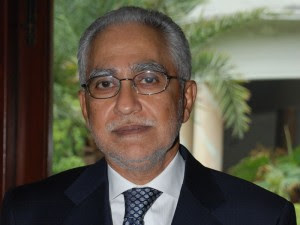
Tariq Saigol & Nasim Saigol
Ranking: 9, Worth: £425m ($850), Industry: Businessman
Tariq Saigol & Nasim Saigol rank number 9 in the list of top 10 richest people of Pakistan. Saigol Group comprises of three different business houses. The Saigol brothers own the followings: Kohinoor Textile Mills, Pak Elektron Ltd. (PEL), Kohinoor Power Company.KTM MONO, Faisalabad Grammar School, Faisalabad (FGS), Kohinoor Energy, Saigol Computers (Private) Limited, Kohinoor Motor Works Limited, Saigol Motors, Sajeel Motors.
10. Dewan Yousaf Farooqui
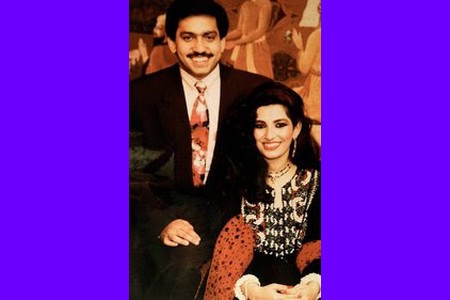
Dewan Yousaf Farooqui

Ranking: 10, Worth: £400m ($800), Industry: Businessman
Dewan Yousuf Farooqui is on number 10 in the list. He is the owner of The “Dewan Mushtaq Group”. The group owns three textile units, a motorcycle manufacturing concern and the largest sugar unit in the country.

History Of Imran Khan | Legend Pakistani Cricketer & Politician

Life Journey Of Imran Khan


Imran khan Pakistan cricket team ke kamyab tareen captain aur mash-hor samaji karkun ke elawa aik kamyab siyasatdan bhi hein. In ka pora naam Imran Khan Niazi hai, in ke walid ka naam Ikramullah Khan Niazi hai aur in ki walda ka naam Shaukat Khanum hai. in ki sabqa bivi ka naam Jemima Khan hai, in ke 2 bete hein, Sulaiman Khan and Qasim Khan hai.
Imran Khan 25 November 1952 ko Lahore mein peda howe. Imran Khan ne ibtadai taleem Punjab ke shehar Lahore mein Cathedral school Lahore aur Aitchison college Lahore se hasil ki es ke bad aala taleem ke liye bartania chale gae aur wahan Royal Grammar School se parhna shoru kar diya aur pher oxford university se BA Honours ki degree hasil ki.

Imran Khan ko bachpan se he cricket khelne ka shosq janon ki had tak tha jab ap oxford university ki cricket team mein select howe to ap ki khushi ki inteha na thi, ap ki salahiyat ko dekhte howe kuch hi dino ke bad aap ko oxfor university ki cricket team ka captain bana diya gaya.

Imran khan ne first class cricket ka aaghaz 1969 mein Lahore ki taraf se Sargodha ke khelaf khela es ke bad kuch he dino mein woh Pakistan ki taraf se apna pehla match England ke khelaf 1971 mein Birmingham mein khela. Es ke bad un ki kamyabi ka safer shoru howa. Imran khan bachpan se he erade ke pakke they aur jo than lete thein ese pora karte thein woh kabhi har nahi mante. Imran Khan niazi jo sochte use pora karne ki than lete yahi wajha hai ke Pakistan ko world champion banane ka jo khawab unho ne dekha bil-aakhir ese pora kar dekhaya aur Pakistan 25 March 1992 ko Australia ke sar-zameen per pehli bar world champion ban gaya.

Imran Khan ki shadi 21 June 1995 ko bartania ke aik businessman James Gold Smith ki beti Jemima se hoi, imran khan se shadi ke liye woh muslim hoen, Jemima se Imran Khan ke do bete hein, Imran aur Jemima ki shadi zyada arsa nahi chali aur sirf 9 saal mein in ki alehdgi ho gai aur woh apne dono bete ko lekar wapas bartania chali gain.

Imran khan hamesha sochte they ke Pakistan mein bhi Cancer ka hospital hona chahiye aur unh one es per bohat mehnat ki aur bil-aakhir woh din bhi aa gaya jab imran khan ne Pakistan ke ghareeb awam ko aik cancer ka haspatal (hospital) diya jo Lahore mein shaukat khanum memorial cancer hospital and research centre ke naam se mojod hai aur us mein be-shumar ghareeb logo ka muft elaj ho raha hai, es kar-e-kher ko pora karne ka imran khan ne usi din soch liya tha jab un ki waleda cancer ki mozi marz ki wajha se intaqal kar gain thin, es ke elawa imran khan ne Pakistani awam ko ek aisi university bhi bana kar diya jis mein duniya ki her degree di jati hai jis ka naam Namal University hai aur namal university 2008 ko wajod mein aai. Es university mein duniya ki her parhai hoti hai.

Imran Khan ne cricket se retirement ke bad siyasat mein qadam rakha aur aik jamaat banai jis ka naam pakistan tehreek insaf hai. Pakistan tehreek insaf 25 April 1996 ko wajod mein aai.

Imran Khan pukhta erade ke malik hein aur woh aik dafa pher aik nae jazbe ke sath Pakistan ko khushal Pakistan banane ka jo khawab dekha hai, bohat jald Pakistan mein khushali, aman aur insaf aane ki umeed ho chali hai.

Cricket Career:

Imran Khan ne first class cricket ka aaghaz 1969 mein Lahore ki taraf se khelte howe kiya es ke elawa imran khan PIA ki taraf se bhi khele aur oxford university ki bhi numaendagi ki, unho ne county cricket bhi khela. Imran khan ka international cricket caree 3 June 1971 mein England ke khelaf khelte howe shoru howa aur 3 saal ke bad woh apna pehla one day (ODI) match bhi England ke khelaf he 31 August 1974 ko khela, imran khan ne aakhri test 2 January 1992 ko Sri Lanka ke khelaf khela aur aakhri one day (ODI) 25 March 1992 ko England ke khelaf khela, inho ne 1992 ka world cup bhi jeta, sabiq captain 1992 ke world cup mein front se lead karte howe Pakistan ko jeet delai.
Career Statistic
Competition
Test
ODI
FC
Match88175382
Runs Scored3,8073,70917,771
Batting Average37.6933.4136.79
100060130
50181993
Top Score136102*170
wickets3621821,287
Best Bowling8/586/148/34
5 Wickets in inning230170
10 Wickets in match06n/a13

Samaji Sar-garmiyan (social activities):

Imran Khan samaji tor per aese kaam kar rahe hein jo mulk aur qoum ke liye bohat aehamyat rakhte hein, woh Imran Khan foundation (IKF) ke naam se aik aesa adara chala rahe hein jo ghareeb awam ki madad kar raha hai es adare ke tawasat se Imran Khan ne District Badin ke ghareeb awam ko 5000 ghar faraham kiye es ke elawa woh cancer ke elaj ke liye shaukat khanum memorial cancer hospital and research centre chala rahe hein aur Namal college jesi saholat Pakistani awam ko faraham kiya hai, Pakistan mein selab zadgan hon ya zalzale ke mutasereen Imran Khan humesha in be-bas aur be-sahara logo ke saath saath khare howe hote hein.
Shaukat Khanum Memorial Cancer Hospital and Research Centre:
Shaukat Khanum Hospital ka qayam 29 December 1994 ko amal mein aaya. Es hospital mein gharebon ka muft elaj kiya jata hai aur ye Pakistan ke qalab Lahore mein waqae hai, Shaukat Khanum Hospital donation ke zarye chal raha hai jis ko dost, ahbab aur pori duniya ke ameer log donate kar rahe hein. Es hospital mein 1000 cancer ke mareezon ka muft elaj hota hai. es hospital ke bani Imran Khan hein.
Namal College/University:
Namal college Punjab ke shehar mianwali mein waqae hai, es college mein duniya ki her subject parhai jati hai. Namal college 40 kenal per mojod hai jo Mr Ghulam Mohammad Seelu ne provide kiya hai ye aik aam insane hein. Es college ke president Imran Khan hein. Imran Khan humesha chahte hein ke Pakistan ke no-jawano ko Pakistan he mein aik mayari aur sasti taleem mil sake aur woh aik din Pakistan ka naam roshan kar sakein.
Siyasi sargarmiyan (political activities):
Khelon ki diniya mein naam kamane ke bad kai cricketer ne Pakistani siyasat mein qadam jamane ki koshesh ki magar kamyabi bohat kam ko mili in he mein ek naam Imran Khan ka hai.

Imran Khan ne 15 saal pehle Pakistan tehreek insaf ki bunyad rakhi aur 15 saal ki an-thak mehnat ke bad Pakistani siyasat mein tesri badi party ke tor per samne aaien, es doran kai hokumatein aain aur chali gain Imran Khan ki soch aur andaz bhi badalti rahi. Imran khan ne 1997 ka election nawaz sharif aur Benazir Bhutto ke khelaf larte howe buri tarha na-kam howe aur jab general perveez Musharaf aain to in ke hami ban gae, referendum mein in ka sath diya magar kuch he dino mein unho ne Musharaf ka sath dene ko apni zindagi ki sab se bari ghalati tasleem kiya aur qoum se perveez musharaf ka sath dene ki wajha se mafi mangi.

2002 ke election mein imran khan ko Mianwali ki nishist se kamyabi mil gai magar national assembly mein un ki aik loti awaz baz-gasht ban ke reh gai aur jab wakla ki tehreek ka aaghaz howa to Imran Khan ne media ke zarye siyasi maqboliyat hasil karni shoru ki aur jab 2008 ka election aaya to election mein hissa na lene ka fesla kiya es tarha no-jawan nasal in ki taraf matawajah hoti chali gai.

History Of General Pervaiz Musharraf | Brave Leader Of Pakistan

Life Journey Of General Pervaiz Musharraf
The tenth President of Pakistan, Pervez Musharraf is a retired four star general of the Pakistan Army. He served as the thirteenth Chief of the Army Staff, as well as the tenth Chairman of the Joint Chiefs of Staff Committee and took over the administration of the country in a military coup in October 1999. Pervez Musharraf headed the administrative military government in Pakistan from October 1999 to August 2007.
Pervez Musharraf was born on 11thAugust, 1943 in Delhi, India. He belonged to a middle class family and several of his ancestors were government officials during the British rule over the sub-continent. His own father, Syed Musharrafuddin, worked in the Foreign Office of the Indian government, while his mother went on to do a masters, a rarity for most Muslim women at the time, and became a school teacher. After the partition of the Indian sub-continent the family migrated to Pakistan and settled in Karachi. Musharraf’s father was posted in Turkey in 1949 and the entire family moved to Ankara when his father became a member of the diplomatic deputation from Pakistan. Musharraf returned to Pakistan in 1957 and attended Saint Patrick’s School in Karachi. He graduated from the Forman Christian College Lahore and in 1961 entered the Pakistan Military Academy, at Kakul.
Musharraf participated in the 1965 war against India and was part of that that elite group of the artillery regiment which launched an offensive on the Kasur-Khem Karan sector. It was in this war that he won the Imtiazi Sanad medal for gallantry. Musharraf became lieutenant colonel in 1974, a colonel in 1978 and staff officer during the 1980s. In 1990 he studied at the Royal College of Defense Studies in Britain for a year. Musharraf became a major general in 1991 and served as the Director-General of Pakistan Army’s Directorate General for the Military Operations (DGMO). In 1997 he was superseded by Liuetenant General Ali Kuli Khan Khattak as Chief of General Staff (CGS), at which Musharraf was quite ‘surprised and disappointed.’ He even contemplated retirement as a lieutenant general. However he was favored by the then Prime Minister Nawaz Sharif and personally promoted to Chairman Joint Chiefs of Staff Committee.
General Pervez Musharraf was the main strategist behind the Kargil plan, which was launched in March 1999. Pakistani and Kashmiri soldiers began infiltrating on the Indian side of the LOC. When India discovered this movement the conflict escalated to a full scale war between May and June 1999. However as the international pressure intensified the Prime Minsite Nawaz Sharif withdrew support to the insurgents in Kargil conflict and the Pakistan Army had to evacuate the captured posts, retracing their steps back to Pakistan. The causalities in Pakistan were heavy and the government even refused to accept the dead bodies of many officers. This greatly antagonized the army and rumors of a possible coup began circulating.
In 1999 in a bloodless coup the Pakistan army took over and replaced the Sharif government. The Prime Minister replaced Musharraf as Chief of Army Staff with Ziauddin Butt on 12th October 1999, while he was still on his way back to Pakistan from Sri Lanka. The Prime Minister ordered the plane carrying Musharraf into Pakistan not to land in Karachi, which caused quite a stir in the army. The army seized the control tower in Karachi Airport, allowing the plane to land and stating the coup. Two days later on 14th October 1999, Musharraf declared a state of emergency in Pakistan issuing a Provisional Constitution Order.
The army rule continued for three years when on 20th April 2002 he held a referendum and formally appointed himself as the President of Pakistan on 20th June 2002. He became a close ally with the US in the aftermath of 9/11 supporting the war on terror. The Bush government provided Pakistan with military and economic assistance. After the fall of the Taliban government in Afghanistan they were able to launch insurgency in Pakistan. ‘By 2005, the Taliban and al-Qaeda were in the midst of a major terrorist campaign against the Musharraf regime.’ During this time the pressure from Bush administration to curb the insurgencies also increased on Musharraf, as the US began firing unnamed drones at Taliban and al-Qaeda targets in Pakistan and carry out cross border incursions. The Pakistani people, opposed to the country’s involvement in the war on terror, retaliated gravely to this and domestic pressure on Musharraf increased.
As the country was gripped in the clutches of suicide bombing and Islamic extremist, anti-Musharraf elements on particular institution, the Lal Masjid became the hub of activity. In their demand to the government to impose sha’riah, madrassah students and women began attacking DVD shops and causing disruptions in their activities. These people were part of the seminaries in the Lal Masjid, owned by two brothers who had continued to challenge the write of the General during his tenure. In July 2007 the Government forces surrounded the Lal Masjid and the stand-off went on for a week. Eventually the forces bombed the mosque to gain entry, killing many of the people inside. This was the last straw. Musharraf was forced to resign in 2008 as the power was transferred to Asif Ali Zardari.

History Of Zulfiqar Ali Bhutto

Life Journey Of Zulfiqar Ali Bhutto

Zulfiqar Ali Bhutto was born on January 5, 1928. He was the only son of Sir Shah Nawaz Bhutto. Zulfiqar Ali Bhutto completed his early education from Bombay’s Cathedral High School. In 1947, he joined the University of Southern California, and later the University of California at Berkeley in June 1949. After completing his degree with honors in Political Science at Berkeley in June 1950, he was admitted to Oxford.

Zulfiqar Ali Bhutto married Nusrat Isphahani on September 8, 1951. He was called to Bar at Lincoln’s Inn in 1953, and the same year his first child, Benazir Bhutto, was born on June 21. On his return to Pakistan, Bhutto started practicing Law at Dingomal’s.
In 1958, he joined President Iskander Mirza’s Cabinet as Commerce Minister. He was the youngest Minister in Ayub Khans Cabinet. In 1963, he took over the post of Foreign Minister from Muhammad Ali Bogra.
His first major achievement was to conclude the Sino-Pakistan boundary agreement on March 2, 1963. In mid 1964, Bhutto helped convince Ayub of the wisdom of establishing closer economic and diplomatic links with Turkey and Iran. The trio later on formed the R. C. D. In June 1966, Bhutto left Ayub’s Cabinet over differences concerning the Tashkent Agreement.
Zulfiqar Ali Bhutto launched Pakistan Peoples Party after leaving Ayub’s Cabinet. In the general elections held in December 1970, P. P. P. won a large majority in West Pakistan but failed to reach an agreement with Sheikh Mujib-ur-Rahman,
majority winner from East Pakistan. Following the 1971 War and the separation of East Pakistan, Yahya Khan resigned and Bhutto took over as President and Chief Martial Law Administrator on December 20, 1971.
In early 1972, Bhutto nationalized ten categories of major industries, and withdrew Pakistan from the Commonwealth of Nations and S. E. A. T. O. when Britain and other western countries recognized the new state of Bangladesh. On March 1, he introduced land reforms, and on July 2, 1972, signed the Simla Agreement with India, which paved the way for the return of occupied lands and the release of Pakistani prisoners captured in East Pakistan in the 1971 war.
After the National Assembly passed the 1973 Constitution, Bhutto was sworn-in as the Prime Minister of the country.

On December 30, 1973, Bhutto laid the foundation of Pakistan’s first steel mill at Pipri, near Karachi. On January 1, 1974, Bhutto nationalized all banks. On February 22, 1974, the second Islamic Summit was inaugurated in Lahore. Heads of States of most of the 38 Islamic countries attended the Summit.
Following a political crisis in the country, Bhutto was imprisoned by General Zia-ul-Haq, who imposed Martial Law on July 5, 1977.
On April 4, 1979, the former Prime Minister was hanged, after the Supreme Court upheld the death sentence passed by the Lahore High Court. The High Court had given him the death sentence on charges of murder of the father of a dissident P. P. P. politician.
Zulfiqar Ali Bhutto was buried in his ancestral village at Garhi Khuda Baksh, next to his father’s grave.

History Of Benazir Bhutto Shaheed | A Brave Leader of Pakistan


  • Upon her return to Pakistan in 1977, she along with her family was placed under house arrest following the dethronement of her father Zulfikar Ali Bhutto from the prime ministership and the emergence of General Mohammad Zia ul-Haq to power.
  • She inherited the leadership of her father’s political party, Pakistan People’s Party (PPP) and spent the next two years organizing rally to force General Haq to drop murder charges against her father.
  • Against local plea and international pressure, Zulfikar Ali Bhutto was hanged on April 1979, following which she was arrested and moved to Larkana Central Jail. In 1981, she was imprisoned in a desert cell in Sindh Province.
  • Succumbing to immense international pressure, she along with her family was allowed to travel abroad in 1984 for medical aid. Following her recuperation, she resumed her political pursuit, becoming a leader in exile for PPP, raising awareness of the state of political prisoners and human right violation under Zia regime.
  • In 1986, she returned to Pakistan after two years of self-exile upon the lifting of the martial law and launched a nationwide campaign for open elections.
  • In 1988, a mysterious air accident caused the death of General Haq, leaving a vacuum in Pakistan politics and the need for elections.
  • In the 1988 elections, the PPP party led by her emerged as the winner, winning the largest percentile of seats in the National Assembly. She was designated to the prime ministerial position on December 2, 1988, thus becoming the first woman prime minister of a Muslim state.
  • During her first term as prime minister, she could not do much to combat the problems of poverty, corruption and crime. Moreover, her aim to shift Pakistan's semi-presidential system to a parliamentary system also turned out to be a failure as most of the proposed laws were vetoed by conservative President Ghulam Ishaq Khan.
  • In 1990, following the failure to curb corruption and unemployment and the downfall in the economic graph of the country, President Khan ousted her from the Prime Minister position using the Eight Amendment with charges of corruption, nepotism and despotism.
  • In the 1990 elections that occurred at the aftermath of her expulsion, her party failed to register a victory and opposition leader Nawaz Shariff succeeded the chair. She accepted her defeat and took over the role of the Leader of Opposition.
  • Following the resignation of Nawaz Sharif and President Khan in 1993, elections were held and PPP party won the same. She was elected for a second term as the Prime Minister of Pakistan. She appointed Farooq Leghari as the President.
  • During election campaign Benazir promised promised price supports for agriculture, pledged a partnership between government and business and campaigned strongly for the female vote. However, once in power, she was not able to implement any of her agendas and failed miserably.
  • She was neither able to contain racial tension that was at its peak in Karachi nor corruption scandals which only worsened the economic condition of the country. Furthermore, women issues were not dealt with as no reforms were made and controversial laws were instead exercised more toughly.
  • She had promised denationalization programme and liberalisation of the economy during her second term but none of the same ever occurred. As such, inflation and unemployment increased thus causing a decline in the living standard of the people.
  • With the ever increasing corruption and death of younger brother, the credibility of her government declined. It faced harsh criticism became hugely unpopular amongst the public, a result of which was dismissal of her government in 1996.
  • In 1997, she moved to Dubai along with her children to escape the corruption charges by the Nawaz Sharif government. Her husband, Asif Ali Zardari was held in captive and imprisoned.
  • From 1996 until 1999, she became the Leader of the Opposition in exile in the Parliament. In 1999, Pakistan’s involvement in Kargil War brought about international shame for the country and hindered Shari’s public image. Benazir capitalized on the situation and gathered support for herself.
  • She aimed to bring her PPP party back in action but when Pakistan Armed forces adopted the coup d'état, she supported the same. With General Pervez Musharraf’s ascend to power, her demand for corruption charges being dropped were denied. As a result, she remained in exile in London and Dubai.
  • In 2002, when Pervez Musharraf amended the Pakistan constitution, banning prime ministers from serving more than two terms, her chance to hold office ever again was disrupted. Furthermore, prohibition for a court-convicted individual from holding party office made it impossible for her to compete in the elections.
  • In 2007, she returned after serving eight years of self-imposed exile. All charges against her were pardoned by Musharraf and a power-sharing deal between Bhutto and Musharraf’s military regime came into force.
  • Upon her return, she participated in the preparation for 2008 parliamentary elections. However, the same was cut short due to her assassination in December 2007